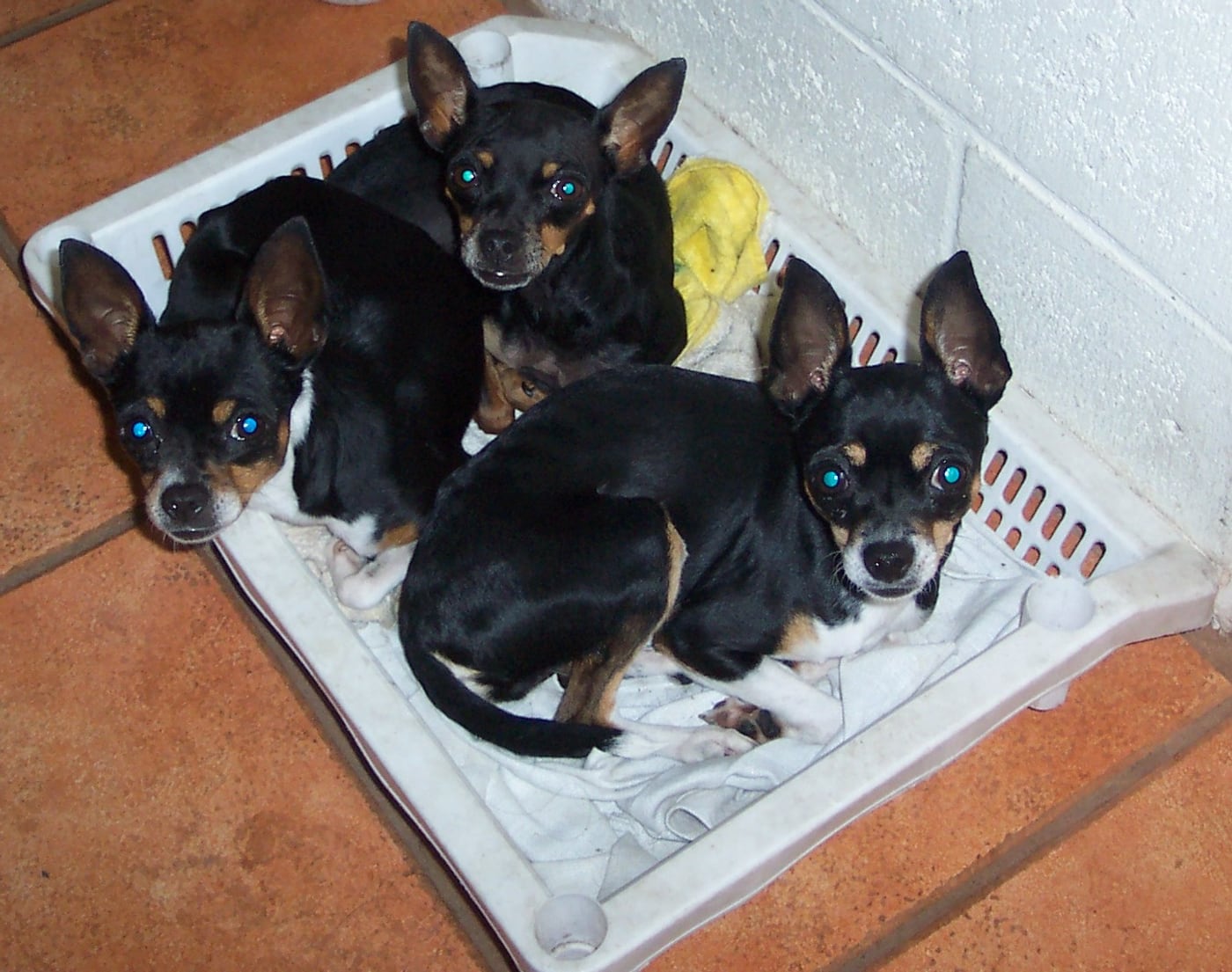
Two people, three chihuahuas, one Plateau apartment.
Eight years, one breed, and a rule that has never changed: never more puppies than we can know by name.
It started with a dog we never intended to breed.
Nova, our first chihuahua, had a temperament our veterinarian called remarkable — curious, sociable, surprisingly solid for her 2.1 kg. He was the one who suggested, after her first round of screenings, that she deserved a litter.
That first litter taught us the essential thing: the difference between a puppy handled every day from birth and a puppy who grew up alone in a cage never fully goes away. You can still hear it today, in the way our adult dogs approach a stranger or a staircase.
Eight years later, we still breed from our apartment. Litters are born in our bedroom, puppies discover the elevator before they leave, and we know each one well enough to know which family they'll suit.
A chihuahua is not a handbag that breathes.
The 2000s turned them into a red-carpet accessory. We'd rather talk about them as dogs — because that's what they are, for twelve to eighteen years.
They really do get cold
In a Montreal winter dipping to -20°C, two kilograms of dog doesn't stand a chance. A coat and boots aren't a fad — they're required gear from November to March.
Not a toy
A child handling one like a stuffed animal can injure it — and a poorly socialized chihuahua who feels threatened can bite. Well socialized from the start, it's rarely an issue.
A long commitment
Twelve to eighteen years, sometimes more: one of the longest-lived breeds there is. Far more than a seasonal accessory.
That's exactly why we ask so many questions before letting you leave with one of our puppies.
One breed, two looks.
We don't diversify. Knowing one breed well beats skimming eight.
Smooth coat
Short, sleek, glossy, low maintenance — a weekly brush is plenty. They feel the wind faster than their long-coat cousins: a winter coat isn't optional.
Long coat
Silkier, with feathering on the ears and tail. It needs brushing two or three times a week to avoid tangles, but keeps an extra layer against the cold.
Where we stand on "teacup". A healthy adult chihuahua typically weighs between 1.5 and 3 kg, per the breed standard. We never breed dogs below that range just to produce miniature puppies: the risk of hypoglycemia, fragile bones and complications at birth climbs sharply below that threshold. "Teacup" isn't a recognized variety — it's a sales pitch, not a health guarantee.
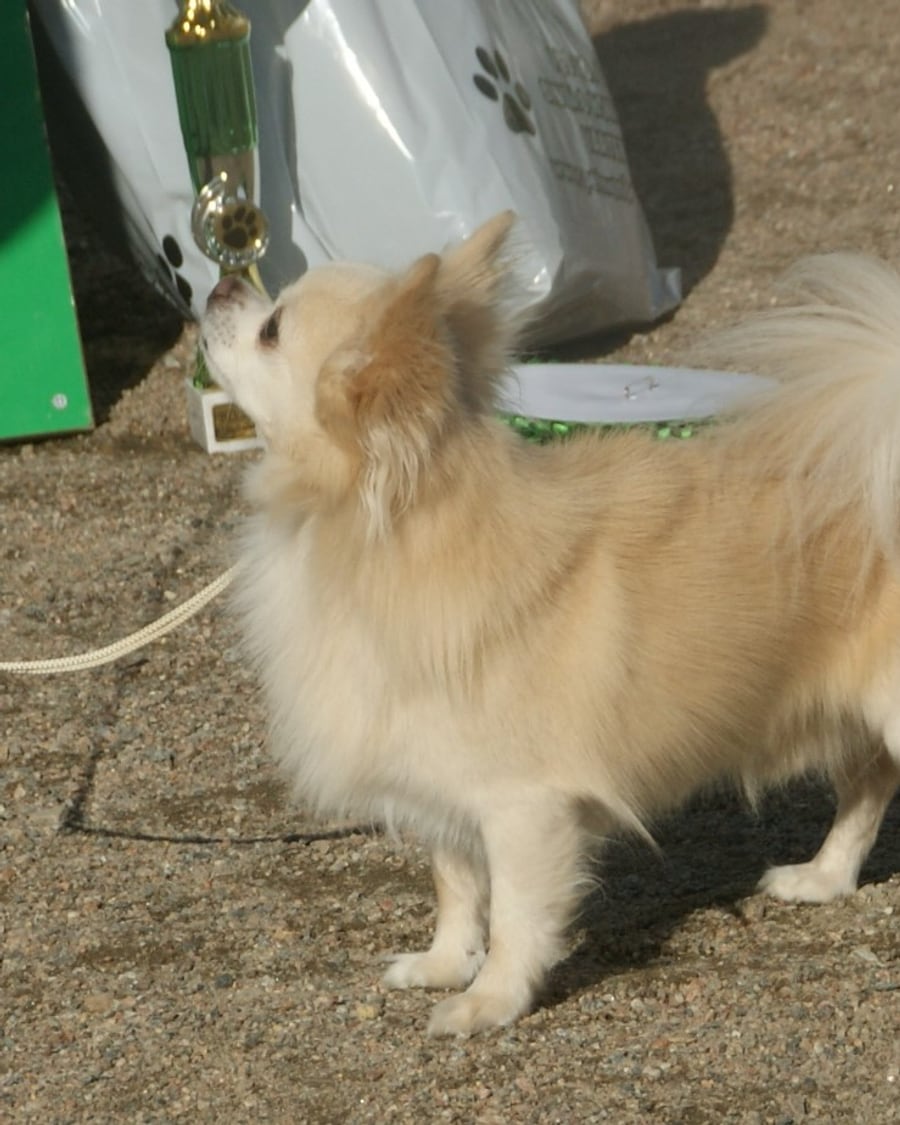
What we screen for, and what we guarantee.
No mating happens until both parents have completed the screenings recommended for the breed. Results are handed to you in person — never just "available on request".
Patella
An orthopedic knee evaluation on both parents before any mating — patellar luxation is common in small breeds.
Heart
A cardiac assessment by a veterinarian, for both the male and the female, before mating.
Eyes and fontanelle
An eye exam, plus a check of the skull fontanelle (the "molera") to confirm it's a normal size.
A written two-year guarantee against serious hereditary conditions. Replacement or refund, your choice. It's also why our puppies never leave before 12 weeks: the time it takes for their blood sugar to stabilize.
Come and see before you decide.
We welcome visits by appointment, even without a firm plan. You'll see our apartment, meet Nova, Comète or Étoile, and get to ask every uncomfortable question you have.
One piece of advice, even if you don't adopt from us: be wary of a "breeder" who offers to meet in a parking lot or won't show you the mother. It's the most reliable signal there is.